Case 2.2 – Anaesthetic Emergencies: Anaphylaxis
Case
You have just anaesthetized Peter, an otherwise healthy 25 year old male, for removal of four wisdom teeth. He has been induced and intubated with a nasal endotracheal tube.
The surgeon is prepping and draping when you notice a distinct rise in heart rate. The NIBP is unable to record a blood pressure. The end-tidal carbon dioxide measurement has dropped and you notice a growing redness of the exposed skin around his mouth.
The drapes are removed and reveal marked erythema of his face, neck arms and torso.
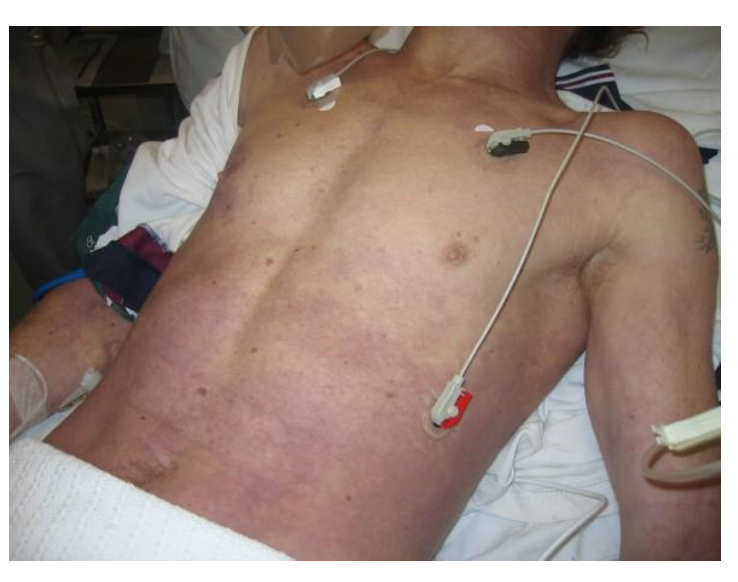
Questions
Clinical Features:
Acute reaction to a chemical or chemical complex that is recognised as hostile. Variable symptoms and signs but classically:
- Bronchospasm
- Profound hypotension due to vasodilatation
- Diffuse erythematous flush
- Urticaria
- Angioneurotic oedema
- GIT symptoms of nausea, abdo pain, diarrhoea
Onset within 5 minutes for parenteral agents but may be delayed for hours. Duration varies from transient to days.
Common Agents:
Outside hospital include bee stings, peanuts; drugs include iodinated contrast media (probably leading cause of death); penicillin; latex. Neuromuscular blockers, colloid intravenous fluids. Incidence difficult to quantify due to reporting being voluntary.
Pathophysiology:
Anaphylaxis classically with prior exposure leading to sensitisation by IgE binding to surface of mast cells and basophils. Subsequent exposure leads to mast cell degranulation and release of histamine, PAF, interleukins, ECF-A and other mediators. Overall effect is vasodilatation, glandular secretion, increased capillary permeability.
The term "anaphylactoid" is best not used for the identical syndrome caused by non-immune mast cell degranulation. Direct histamine-release by drugs indistinguishable clinically and treatment identical. Probably best to use terms like "immune" and "non-immune" anaphylaxis.
Pathophysiology of the hypotension a little unclear how much contribution from myocardial depression, though clinically and on Echo, see empty, normally-contracting heart.
Treatment. No RCT's due to unexpected onset, rapid course, and (usually) rapid response to treatment.
- Oxygen. Intubation if airway oedema. Ventilation if bronchospasm severe.
- Adrenaline. In the community, give imi eg 0.3 – 1mg. In hospital or if muscle blood flow thought to be compromised (eg CPR) give ivi as 3 – 5 ml of 1/10,000 solution (Minijet). Further doses needed in 1/3 and infusion for some minutes or hours in 10%. Adrenaline universally recommended – beneficial effect on vascular tone as well as inhibiting further mediator release.
- Refractory hypotension has been managed with noradrenaline and /or vasopressin.
- Intravenous fluids preferably as colloids.
- Corticosteroids have no proven benefit and should be reserved for refractory bronchospasm (nor is there evidence of harm, and so usually end up being given anyway!);
- H1 and H2 blockers are often given.
Common triggers in the anaesthetic and operating theatre environment include:
- Neuromuscular blockers (most common)
- Latex (gloves, equipment)
- Antibiotics (particularly penicillin and cephalosporins)
- Colloid intravenous fluids
- Iodinated contrast media
- Chlorhexidine (in antiseptic solutions)
Follow up:
- Mast cell tryptase. Elevated from 1 – 4 hours after reaction. Can be used post-mortem. Highly sensitive and specific.
- Testing by intradermal skin-prick >4 weeks after reaction.
- If positive, a "medic-alert" bracelet should be worn.